
Once or Twice Marketing - When there's just one chance to get it right.

Written by Mark Hull
Have you noticed just how often when we discuss marketing, we’re usually talking about the repeatable purchase stuff? You know – FMCG brands encouraging you to pick up their product week after week, or the latest subscription service that nudges you to keep that monthly commitment, or consumer durables coaxing you to upgrade to the latest version after a couple of years.

A lot of marketing theory and thought leadership seems to focus on these kinds of brands too – for example, How Brands Grow and the Double Jeopardy law (high penetration brands are purchased more frequently), the Duplicate Purchase Law (buyers will purchase from multiple brands), and the endless discussions where lifetime value, longevity and repeat purchases are the holy grail.
But what happens when it’s not about purchase frequency, retention, loyalty or Annual Recurring Revenue? What happens when a business has just one chance to win over a customer? When it comes to products or services bought just Once or Twice in a lifetime. It requires a shift in the approach to marketing.
This is what I call Once or Twice Marketing, and I’m not saying the fundamental principles of marketing completely change, far from it, but there are definitely some adjustments required to ensure that when a customer is ready to buy, you’re the first and only choice.

What exactly is a Once or Twice product?
When you actually start to think about the products or services that fit the description of a Once or Twice purchase there are quite a few – I’ve defined 4 separate categories. Each has distinct characteristics, but all share the common trait that the typical customer is only likely to be in the market to actually make a purchase just Once or Twice in their lifetime.
“There are thousands of businesses that have just one chance to win a customer – because what they sell is only ever purchased Once or Twice by any individual”
“There are thousands of businesses that have just one chance to win a customer – because what they sell is only ever purchased Once or Twice by any individual”
What exactly is a Once or Twice product?
When you actually start to think about the products or services that fit the description of a Once or Twice purchase there are quite a few – I’ve defined 4 separate categories. Each has distinct characteristics, but all share the common trait that the typical customer is only likely to be in the market to actually make a purchase just Once or Twice in their lifetime.
Big One-Off Purchases
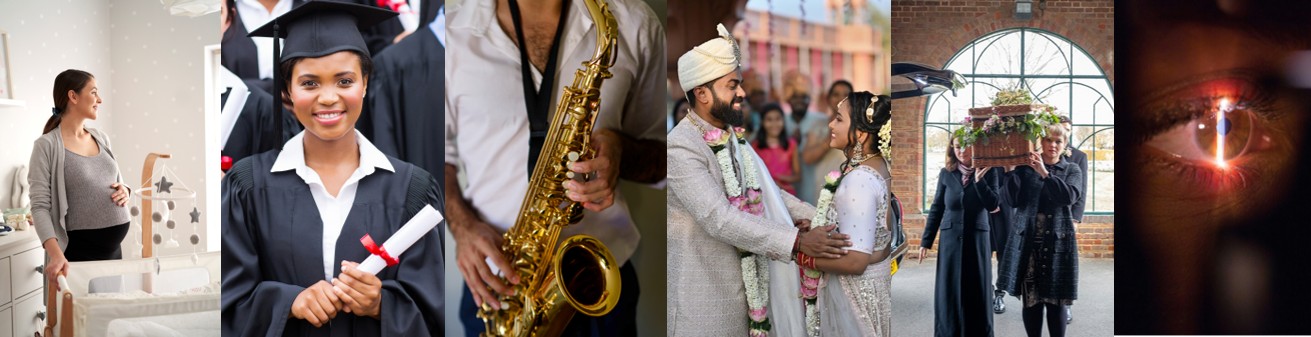
These are significant, often high-cost purchases. In some instances, not only is it a one-time purchase, but it has to be right first time as there are no second chances – think funerals, anything to do with weddings, or surgery. In other examples the product may have a long-lasting utility to the customer, but the customer’s relationship with the supplier typically ends once the product or service is delivered (or the warranty expires).
Examples: funerals, weddings (bridal shops, venues, photographers), baby items (pushchair, nursery furniture), building extensions, conservatories, double glazing, roof windows, new homes, fitted kitchens, fitted bedrooms, honeymoon, landscaping, garden offices, engagement rings, lawyer/solicitor, boiler breakdown, private investigator, architects, builders, bathrooms, bespoke furniture, security systems, laser eye surgery, elective surgery, dental braces, fertility clinics, luxury watches, swimming pools, air conditioning.
Commitment Purchases
These purchases involve a long-term commitment to a provider. While customers could switch providers if something goes wrong, once the purchase decision has been made, they are generally committed for the long haul.
Examples: children’s nurseries, care homes, private schools, universities, financial advisors, life insurance, funeral plans, annuity providers, hearing aids, optician services. From a B2B perspective things such as enterprise software or business premises would fit here too.
Small One-Off Purchases
These are usually smaller, specialised purchases that address a specific need. Specialist retailers and service providers often curate and sell a number of these types of products – think DIY stores or bookshops. In some instances, these may be hired rather than purchased from a specialist hire business – think rarely needed tools.
Examples: pest control, locksmith services, plumbers, certain DIY items, set of ladders, alarms, doorbells, conveyancing services, safes, DNA ancestry reports, 3D baby scans, books, musical instruments, removal firms, cement mixers, floor sander.
Transitory Purchases
Whilst not specifically a Once or Twice product, these are purchases are made whilst in transit, where the customer is unlikely to be in that same place again and therefore the business has just one opportunity to win that particular customer.
Examples: Tourist attractions, restaurants in tourist areas, boutique hotels, car rentals, souvenir shops, local guided tours and excursions.
It’s often not that simple to buy
The thing about most of stuff we buy, is it’s easy, familiar, and we have some level of knowledge and experience on what to base our decisions on. But when it comes to Once or Twice situations, for most customers this is uncharted territory, they’re stepping into a buying experience they may have little to no prior knowledge of. And a lot these types of purchases are big important decisions framed around major life-stage moments – like going to university, getting engaged or married, buying a home, having children, or preparing end-of-life plans – people are typically seeking trust, quality and reassurance – they want to get this decision right – and that really affects buyer behaviour in a very different way to those repeatable purchase decisions. Some of the key buyer behaviour considerations that a Once or Twice business needs to be conscious of include:
- Moment of need. The majority of these purchases will be very deliberate and planned, often timed with a particular stage in life, and to some extent predictable. Others come out of nowhere, they’re unexpected and forced on the customer with no warning or preparation.
- Situation and mindset. Ultimately influenced by the above, the mindset of the customer will be different based on when they enter the market. If it is the unexpected scenario, then there will be an element of distress and a requirement for rapid decision making. Whereas the planned purchases will afford a high consideration process – with months and sometimes years of research, planning and decision making.
- Knowledge. The customer will likely have limited knowledge on the product – and will be looking for ways to educate themselves, and in the absence of knowledge things such as brand familiarity, social proof and recommendations will play an even more important role.
- Rational and deliberate. While familiar, repeat purchases rely heavily on System 1 thinking – fast, intuitive, and automatic responses – Once or Twice purchases involve much more System 2 processing. Here, rational, deliberate thinking plays a larger role, as consumers look to weigh options and educate themselves thoroughly. System 1 does come into play, especially for initial brand recognition and the forming of an initial consideration set – but there will be a greater role for System 2 and rational thinking on purchase decisions.
- High expectations. Consumers will often be aware that this is a once in a lifetime purchase and as such will be looking for quality, durability and satisfaction, they want the best and will often push their budgets to the max to get the best possible solution they can afford. Sometimes they will even go beyond their max to get what they really want.
- Multiple decision makers. Expect there to be more than one person involved in the purchase decision – making it difficult to ensure your messaging is truly targeted.
- Physical preferences. Yes, digital will play a huge role in the discovery and education phase of the customer journey, but for many Once or Twice purchases physical experience is critical – and consumers will be looking to experience first hand the product before committing to making a purchase. This also plays into the localisation and physical availability of the product offering.
- Human biases. There is a ton of behavioural biases that have an impact on Once or Twice purchases. Scarcity effect, loss aversion, anchoring, endowment effect, confirmation bias, sunk cost fallacy and more. Too much detail to go into in this blog post – but I will follow up on this one in later posts.
– The marketing challenge for Once or Twice businesses
Marketing as a discipline is undergoing a bit of a renaissance right now. Thanks to the likes of Byron Sharp, Jenni Romaniuk and the Ehrenberg Bass Institute, Les Binet & Peter Field, System 1, Mark Ritson, Grace Kite, Karen Nelson-Field and a host of other super switched on and intelligent people, we’re making huge strides in truly understanding what constitutes truly effective marketing strategy and application. Concepts like the long & short of it, ESOV, physical and mental availability, creative consistency, the 95:5 rule are all contributing to better and more effective marketing in many businesses. And whilst these principles are universal and relevant for Once or Twice Marketing – they need to be adapted and applied in the right way to reflect the specific nature of a Once or Twice business.
For instance, in Once or Twice Marketing, the 95:5 rule, which suggests that only 5% of consumers are in buying mode at any given time – might actually be more like 99:1. Something that perhaps deserves a bit of specific research and I may get round to at some point. But the point is most potential customers for Once or Twice products are not ready to buy right now but will be in the future. This reality underscores the importance of long-term brand building. As a Once or Twice brand, your goal is to be the first name that comes to mind when a customer eventually reaches a “category entry point.” In other words, you need to be remembered.
This is where the balance of long and short-term marketing becomes critical. Building brand awareness over time ensures you’re known and provides that sense of familiarity so important in the absence of product knowledge. But it’s just as important to be found when that rare purchase moment arrives – for Once or Twice brands, physical availability – ensuring you’re discoverable across key channels when that moment comes – is as essential as mental availability. Both work together to make sure that, at that pivotal moment, your brand is top of mind and top of search.
Another key difference in Once or Twice Marketing is how customers process information. With high-frequency purchases, customers often rely on System 1 thinking – automatic, intuitive, and emotionally driven. But for Once or Twice purchases, System 2 thinking is more prevalent. Customers weigh options, conduct extensive research, and make decisions over a longer time period. Whilst there is also the need to be conscious that for distress purchases, decision-making may be rapid and emotionally charged and heavily lean on System 1 thinking.
This dynamic means that Once or Twice brands must find the right balance between creating an immediate emotional connection (System 1) and supporting a more rational, research-based decision-making process (System 2). I’ve already highlighted that the customer journey may involve prolonged research and high personalisation – which provides significant challenges to marketing teams working on Once or Twice products. Brands need to understand where they fall on this System 1-System 2 spectrum and adapt their messaging and touchpoints accordingly.
As well as thinking through some of these core principles and adapting them to the unique nature of Once or Twice marketing, there are many, many other specific aspects to consider. For example, with market orientation and identifying your target customer profiles – it is perhaps easy to identify those for short term activation, but how do you define your total market audience for long term activity, when you don’t necessarily know the pathway their life may take and whether they will eventually transition into your target customer profiles – do you just target the whole population? (Answer: not always – ultimately it depends on your research and strategy). What about the actual product and brand differentiation (and distinctiveness), pricing strategy, the highly involved customer experience, and in a particularly unique aspect, how to ensure there is a good ending when that short term relationship between the customer and the business is over.
Making sure you win when there’s just one chance
Ultimately, Once or Twice Marketing demands a unique approach rooted in the core fundamentals of effective marketing strategy. For brands with only one chance to win the customer, every touchpoint, every interaction, every piece of content must be crafted with purpose and precision – both in advance and also at that critical Category Entry Point moment. The goal isn’t just to make a sale; it’s to ensure that when the time comes, your brand is the clear and confident choice.
The full breadth and detail of how to effectively market a Once or Twice product is too much to fully cover in a single post and is enough to fill a book – which just so happens is in the works. But I will be looking to regularly write and share new research, content and insights on specific areas of Once or Twice marketing – so please do follow me or subscribe if you are interested and want to learn more.
Written by Mark Hull
Mark Hull is the founder of Once or Twice – marketing strategy, execution and support for brands whose customers will typically buy their products or services just Once or Twice in a lifetime.
Mark is a Chartered Marketer and Fellow of the Chartered Institute of Marketing with over 25 years marketing experience, and more than 10 of those spent leading the marketing for the UK’s biggest businesses in arguably one of the hardest Once or Twice product categories – funerals and funeral plans.
Once or Twice can provide fractional, advisor, consulting or fixed term contract support to businesses to help them win when that one chance comes around. Mark can also provide Keynote presentations on Once or Twice and how to win when you have just once chance.
Related Articles
Related
Why harnessing brand intuition is the superpower you need
When I buy salad cream, I don’t think. I just grab the brand I always get (as long as it’s physically available). And yes, for me, it has to be Heinz.No hesitation. No comparison. It’s automatic.This sometimes gets incorrectly labelled as instinctive behaviour, but...
You don’t need to be a big business to be a big brand
It’s not necessary to have national reach or mass-market fame to build a brand that matters. For small business branding, what counts is being known, trusted, and remembered by the right audience. Which means even niche or local businesses can build brands that punch...
Winning a customer requires preparation
You can’t turn up to the final of an Olympic race and expect to just win. First of all, if you did that, you wouldn’t even get on the track - you’ve got to earn your place there. Secondly, and supposing you’ve done everything necessary to qualify, there are at least...