
You don't need to be a big business to be a big brand.

Written by Mark Hull
It’s not necessary to have national reach or mass-market fame to build a brand that matters. For small business branding, what counts is being known, trusted, and remembered by the right audience. Which means even niche or local businesses can build brands that punch far above their weight.
Brand power ≠ Business size
What is it that makes brands big? global recognition? huge marketing teams and big budgets? massive TV campaigns or sponsoring a Premier League football team? Sure, they’re all markers of a big brand – but you don’t need any of these to build a powerful brand.
“Being a powerful brand isn’t about being famous to everyone.
It’s about being remembered in the right way by the right people”
Fame is relative
Have you ever heard of Maurten? If you’re like me and take part in triathlons, or other endurance sports, then you probably know the brand. Their energy gels and drinks are used by professionals and novices across the world – including Mo Farah as shown below. But outside of these sports, they’re largely unknown. And that’s perfectly fine. Within their niche, they’re premium, trusted, and admired.

How about the restaurant Anoki? If you live in the midlands of the UK, around Derby and Burton-upon-Trent, you’ll likely know this Indian restaurant that sits on the A38. Ask a local and they’ll sing its praises. Ask someone in Glasgow and you’ll probably get a blank stare. And that’s not a problem. Anoki have built a brand and reputation where it matters.
One more. Marketing Week’s MiniMBA course with Mark Ritson. For those in the marketing industry, Marketing Week is a media brand that has been around for nearly 50 years, and Mark Ritson is possibly one of the most famous marketers around. But ask my neighbour, who’s a Finance Director, or the mechanic who fixed my car this morning – and neither will have a clue who they are. And they don’t need to.
These are just three examples of brands that are big in just the right places. They’ve built visibility, salience, and credibility in the right circles, without needing ‘mass-market’ tactics or multi-million-pound budgets. That’s brand building done well.
How can a business become a powerful brand?
You can’t create a powerful brand overnight – to succeed, it requires a lot of work and effort in all that the business does. But it is possible to succeed – you just need to be strategic.
1. Know your market and your audience
The foundation of any strategy and the first step is market orientation. You need to define exactly what your market is, fully understand your audience, and know your ideal customer – which requires research and analysis.
It’s not enough to just understand who your audience might be – you need to fully know what their problems are so that you can orientate your business and marketing activity to solve that problem.
Get this part right, and you will have the clarity and insight needed to ensure the rest of your strategy and plans fall into place.
2. Find your place.
Knowing your audience and their needs, allows you to now adapt and refine what you offer.
You need to be sure of your product-market fit, which means having the confidence that your product will solve the specific problem you’ve identified in your specified market.
With the clear understanding of your market and your competition you can price your offering in the most appropriate way.
And with that sorted, you can then focus on finding your place. Being clear on your position and defining what differentiates your brand and product from everything else.
You’ll need to define this position – this is often referred to as your brand promise, brand vision, brand DNA, brand purpose – whatever you want to name it, this is being crystal clear on what you want your brand to stand for. This is how you want your brand to be perceived in the customers mind, and it ultimately drives your image and how you present yourself to your audience.
3. Be distinctive – and consistent
One of the most important aspects of being a powerful brand is being recalled or recognised at the Category Entry Point (which is the moment someone enters the market to buy your product or service).
And when you’re a Once or Twice business and the customer is only going to be in the market to buy your product on that one occasion, this is the moment of truth, this is where you either win or lose.
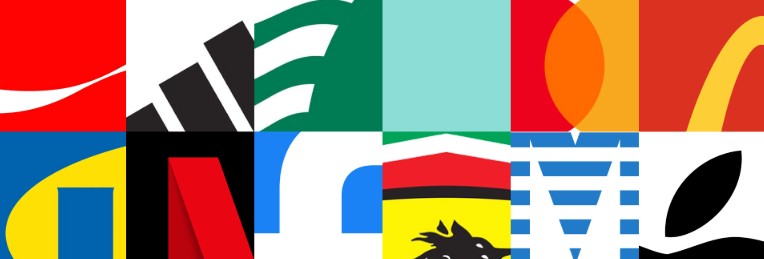
But the work to win in that moment, happens long before the actual moment arrives. You need to develop your brand identity and your distinctive brand assets – which is more than just your logo. Your logo is essential, but it also includes your name, colours, distinct shapes or patterns, fonts, characters, music, sounds and more – anything that you can own and either alone or combined, distinguishes you from any other competition.
And once you have determined your distinctive assets you need to use them everywhere. Any chance you have to use your assets, do so. And be consistent with them too. Don’t be tempted to make changes after a couple of years – because your customers won’t be in the market every year, and it could be several years before they are – they need to be able to find and identify you – so ensure you look the same as you always have.
Being distinctive and consistent is essential for businesses without big budgets, because over time it will ensure that any marketing you do has a greater impact, because the effects are cumulative for all the activity you have done up to that point.
4. Promote for the long-term
Now you’ve done all the groundwork – you know your audience, you know what you are and how you want to present yourself, it’s time to tell your story and build that powerful brand. You don’t need to be on TV. You don’t need billboards in Piccadilly Circus. But you do need to be seen. And not just seen – you need to be understood, trusted, and remembered.
That starts with strong, relevant creative and an appropriate media plan that gets it in front of your specific audience.
It’s sensible to split your budget into two parts – brand building and sales activation. It’s often referred to as the Long and Short. The right balance depends on several factors, such as the type of business, its maturity, its sales channels – but for Once or Twice businesses, where perhaps 99% of your audience are not in the market to buy right now, if you are investing less than 50% of your budget on brand, you may be under-investing in your future customers.
And why is it sensible to have separate budgets? Because the creative style and messaging needs to be different. Brand campaigns should engage emotionally, tell stories, and create associations. Sales activation tends to be more rational – focused on product, price, and urgency. Trying to do both in one campaign usually ends up doing neither well, because they have different objectives.
Media has advanced so much in the past decade that you now have so much more opportunity to reach a defined audience. It’s sophisticated and targeted mass marketing. You can build brand fame efficiently through digital channels – like YouTube, podcasts, display, or social, often with geographic or behavioural targeting that helps you focus on your Ideal Customer Profile. Of course, you can still use local radio, press, posters, direct mail or specific sponsorship. And whilst TV was always reserved for the big brands, that’s no longer the case. Highly targeted TV advertising is now more affordable and accessible than ever, even to small businesses.
Get the media plan right to accompany all the important groundwork – and although you may not be classed as one the biggest brands – you’ll be the one that feels big to the people who matter.

You only get one chance – make it count
Most Once or Twice businesses aren’t big brands. That’s fine. You don’t need global fame to become a powerful brand. But you do need to be the brand your customer remembers when it matters.
And that’s no small task.
Because for Once or Twice businesses, you don’t get repeat chances. You have one shot. One decision-making moment. One point in time where all your effort either pays off – or gets forgotten.
And make no mistake: getting to that moment where your brand shines and the choice becomes easy for the customer? That takes proper strategy.
Not guesswork. Not gut feel. Not a few Facebook ads or a Canva logo.
It takes:
- Clear market orientation
- Real product–market fit
- Sharp positioning
- Distinctive brand assets
- Stand out Creative
- Long-term media planning
- And the discipline to invest in brand, not just short-term sales.
That’s not easy work. That’s small business branding.
And that’s what we do.
At Once or Twice, we specialise in helping businesses like yours do this properly. We bring clarity, experience, and the frameworks that actually work. We help you build a brand that feels big to the right people when it matters.
So if you’re serious about standing out…
If you’re ready to be remembered, not ignored…
If you understand the value of getting this right the first time…
Then let’s talk.
Let’s make sure you’re remembered. Let’s make sure you’re prepared to succeed.
Written by Mark Hull
Mark Hull is the founder of Once or Twice – marketing strategy, execution and support for brands whose customers will typically buy their products or services just Once or Twice in a lifetime.
Mark is a Chartered Marketer and Fellow of the Chartered Institute of Marketing with over 25 years marketing experience, and more than 10 of those spent leading the marketing for the UK’s biggest businesses in arguably one of the hardest Once or Twice product categories – funerals and funeral plans.
Once or Twice can provide fractional, advisor, consulting or fixed term contract support to businesses to help them win when that one chance comes around. Mark can also provide Keynote presentations on Once or Twice and how to win when you have just once chance.
Related Articles
Related
Why harnessing brand intuition is the superpower you need
When I buy salad cream, I don’t think. I just grab the brand I always get (as long as it’s physically available). And yes, for me, it has to be Heinz.No hesitation. No comparison. It’s automatic.This sometimes gets incorrectly labelled as instinctive behaviour, but...
What is Once or Twice Marketing?
Have you noticed just how often when we discuss marketing, we’re usually talking about the repeatable purchase stuff? You know – FMCG brands encouraging you to pick up their product week after week, or the latest subscription service that nudges you to keep that...
Winning a customer requires preparation
You can’t turn up to the final of an Olympic race and expect to just win. First of all, if you did that, you wouldn’t even get on the track - you’ve got to earn your place there. Secondly, and supposing you’ve done everything necessary to qualify, there are at least...